


I have worked in organ transplantation for more than four decades in Germany, Canada, and China, serving in clinical, academic, and professional leadership roles. This article reflects my personal assessment of a documentary and the broader international debate surrounding China's transplantation system. It is intended to encourage evidence-based scientific discussion rather than to discourage legitimate ethical scrutiny.
Chapter 1
State-Owned Organs: A Documentary Under Scrutiny
In 2024, the documentary State-Owned Organs was released by media organizations associated with the Falun Gong movement. Promoted as an investigative documentary exposing systematic state-sponsored organ procurement in China, the film quickly became the centerpiece of an international publicity campaign. It was screened at public events in multiple countries, widely promoted through Falun Gong's global media network, and presented as compelling evidence of continuing abuses within China's transplantation system.
From a cinematic perspective, State-Owned Organs follows a narrative structure that resembles that of the 2006 American thriller Turistas (released in some countries as Paradise Lost). In Turistas, a group of young travelers in Brazil become victims of a clandestine organ-trafficking network run by a surgeon who murders healthy tourists to obtain transplantable organs. The film relies on familiar elements of the suspense genre: isolated victims, secret operating facilities, graphic surgical scenes, morally unambiguous perpetrators, and escalating tension leading to a dramatic climax. Although State-Owned Organs presents itself as a documentary rather than a work of fiction, it employs several of the same cinematic devices, including dramatic reenactments, dark visual aesthetics, emotionally charged music, and a storyline built around individual victims confronting an unseen, highly organized system. These techniques are effective in creating emotional engagement and narrative coherence. They are, however, characteristics of persuasive storytelling rather than, in themselves, indicators of evidentiary strength. For readers and viewers, it is therefore important to distinguish between the emotional power of a narrative and the independent evidence offered in support of its central claims.
The documentary deserves careful examination—not only because of the seriousness of its allegations, but also because of the influence it has acquired in political, human-rights, and medical discussions. Extraordinary claims require equally robust evidence. This article therefore examines the documentary's principal assertions, the organizations promoting them, and the evidence supporting competing interpretations.
One of the documentary's principal witnesses is Zheng Zhi, who appeared in October 2025 on the Falun Gong television channel New Tang Dynasty Television (NTD). Introducing himself as a former urologist at the Shenyang Army General Hospital, Zheng claimed that he had personally participated in an "organ harvesting" operation during which he removed a person's eyes inside a van.
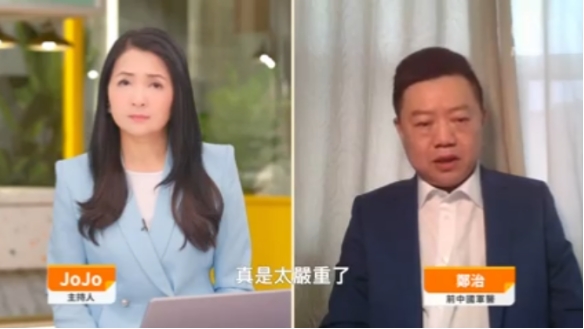
△ Zheng Zhi (right) participates in a video interview with NTD Television.
Corneal procurement is not a procedure that can simply be performed by any physician. It requires highly specialized ophthalmic training, meticulous microsurgical technique, and strict adherence to established procurement protocols. Even experienced ophthalmologists undergo dedicated training before performing such procedures independently. The suggestion that an inexperienced urology trainee could successfully retrieve ocular tissue for transplantation under improvised conditions is difficult to reconcile with standard clinical practice.
A remarkably similar narrative forms the foundation of State-Owned Organs. Rather than presenting forensic investigations or primary documentary evidence, the film relies principally on personal testimony, interviews, dramatic reenactments, and purported telephone recordings. Independent on-site investigations, archival documentation, or verification by recognized professional institutions play only a limited role in the narrative presented.
From a filmmaking perspective, State-Owned Organs is professionally produced. The documentary combines personal stories, emotionally charged music, cinematic reenactments, and carefully constructed visual sequences to create a compelling narrative. Such techniques are common in advocacy documentaries and can be highly effective in engaging audiences emotionally. Whether they also strengthen the underlying evidentiary case is a separate question that deserves independent evaluation.
Following its release, the film was extensively promoted through Falun Gong's international media network. According to The Epoch Times, the documentary was screened publicly in more than ten countries and regions, including more than 900 screenings in Taiwan. Zheng Zhi himself became an active participant in these promotional activities.
Public reception, however, has been mixed. By June 2026, State-Owned Organs held an IMDb rating of 5.7. On Rotten Tomatoes, nearly seventy percent of audience reviews were negative, with many reviewers criticizing the documentary for relying heavily on emotional narrative while providing insufficient independently verifiable evidence.
One reviewer wrote:
"This film fails to provide a comprehensive and impartial perspective. Instead, it employs biased and sensational narrative techniques, fabricating a large number of unverified 'facts.' State-Owned Organs not only lacks a factual basis but also carries a strong political agenda."
Another commented:
"This movie is riddled with plot holes, defies the laws of physics, and frequently fails to provide reasonable explanations for key events. The characters' reactions are unrealistic, making the entire story feel artificial and contrived."
A third reviewer concluded:
"This film relies heavily on rumors and unverified testimony, with almost no solid evidence to support its claims. By prioritizing emotional storytelling over rigorous analysis, it ultimately has very little credibility."
Having worked in transplantation for more than four decades in Germany, Canada, and China, I approached State-Owned Organs expecting an evidence-based investigation of extraordinarily serious allegations. Instead, I found a production that relies overwhelmingly on cinematic storytelling while providing remarkably little independently verifiable evidence. The documentary employs many of the narrative devices of a Hollywood medical thriller—dramatic reconstructions, emotionally charged music, anonymous villains, vulnerable victims, and escalating suspense—but largely fails to provide the documentary evidence that allegations of this magnitude demand. It asks viewers to believe first and examine the evidence later. That is the reverse of how scientific inquiry, investigative journalism, and the rule of law are supposed to function.
Chapter 2
Testing the Evidence: Do the Documentary's Central Claims Withstand Medical Scrutiny?
The allegations presented in State-Owned Organs did not emerge in isolation. They represent the latest chapter in a campaign that has evolved over nearly two decades. To understand the documentary, it is therefore necessary to examine the broader history of the claims, the individuals who have promoted them, and the evidence on which they rely.
Since the Sujiatun allegations first appeared in 2006, accusations of systematic "organ harvesting" have become a recurring feature of Falun Gong's public messaging. Over time, the names of individual witnesses have changed, but the central narrative has remained remarkably consistent. Each new documentary, report, or public campaign has largely built upon earlier accounts rather than presenting fundamentally new evidence.
The documentary State-Owned Organs follows this established pattern. Many of its principal themes, witnesses, and allegations closely resemble narratives that have circulated repeatedly over the past twenty years. Rather than treating the film as an isolated production, it is more appropriately viewed as the latest expression of a long-running public campaign.
Having worked in transplantation throughout this period, I have followed these allegations from their earliest appearance. During those years I served in leadership positions within the German Transplantation Society, Eurotransplant, the German Medical Association, and later within the Chinese transplantation system. This unique perspective allowed me to observe not only the evolution of transplantation in China but also the parallel evolution of the international debate surrounding it.
One striking feature of this debate is the recurring reliance on personal testimony. Individual witnesses have frequently become the focal point of public attention, often receiving extensive media coverage before their accounts have undergone independent scientific or forensic scrutiny.
Among the earliest examples were the witnesses known publicly as "Annie" and "Peter." Their testimony became central to the initial allegations of organ harvesting. According to information cited in this manuscript, both individuals claimed to possess direct knowledge of events occurring in China, although subsequent criticism questioned the extent of their first-hand involvement.
State-Owned Organs presents itself as an investigative documentary exposing a state-directed system of forced organ procurement in China. Such an allegation, if true, would constitute one of the gravest violations of medical ethics in modern history. It therefore requires an equally extraordinary standard of proof.
The documentary attempts to establish its central thesis through personal testimonies, historical accounts, advocacy interviews, and selected medical interpretations. While these narratives are emotionally compelling, they do not themselves constitute proof. In medicine, testimony generates hypotheses; it does not establish facts. Facts emerge only when testimony is supported by objective evidence that is independently verifiable.
To evaluate the documentary's credibility, I examined the principal cases presented as its strongest evidence against available medical records, imaging studies, pathology reports, accepted surgical practice, and established principles of transplantation.
The Cheng Peiming Case
Falun Gong portrays Cheng Peiming as the first known survivor of forced organ harvesting and uses his testimony as direct evidence of organ procurement.

△Scene of the Falun Gong press conference on July 3, 2024
The available medical documentation tells a different story.
Hospital records document that in November 2004 Cheng Peiming underwent emergency surgery after intentionally swallowing a large razor blade and an iron nail. Radiological examinations demonstrated a razor blade lodged in the upper oesophagus adjacent to the aortic arch while the nail had progressed into the gastrointestinal tract. After unsuccessful attempts at endoscopic removal, a thoracotomy was performed to remove the foreign bodies. The operation was a standard emergency surgical procedure performed to prevent catastrophic oesophageal or vascular injury.
The documentary further claims that parts of Cheng Peiming's left lung and liver were removed for transplantation. This allegation is not supported by the medical evidence.
Review of the published imaging demonstrates preserved pulmonary and hepatic anatomy inconsistent with organ procurement. The CT reconstructions show no evidence of removal of an entire pulmonary lobe, which would be required for transplantation, while the left lateral liver segment remains identifiable. Furthermore, no abdominal scar compatible with liver procurement is visible. The documentary itself refers only to a "partial" loss of lung tissue, an anatomical description incompatible with clinical lung transplantation.
The clinical history also contradicts the allegation. Cheng Peiming had previously suffered pulmonary tuberculosis, rendering the lung unsuitable for transplantation under universally accepted transplant criteria. Moreover, the hospital where the operation was performed neither possessed transplant capability at that time nor performs transplant surgery today.
Taken together, the hospital records, operative indication, imaging findings, surgical anatomy, and transplant principles consistently support emergency treatment for self-inflicted foreign-body ingestion rather than organ procurement.
The Zhang Qi Case
Falun Gong uses Zhang Qi as further evidence of forced organ harvesting. Once again, the narrative relies principally on retrospective testimony.
The available clinical documentation supports a different conclusion.
Zhang Qi underwent pulmonary resection because of severe pulmonary infection. The diagnosis was confirmed by histopathological examination of the resected lung specimen. This pathology establishes the medical indication for surgery and documents that the operation was performed as therapeutic treatment for diseased lung tissue rather than for organ procurement.
The pathological diagnosis has additional significance in transplantation medicine. Lungs affected by severe pulmonary infection are unsuitable for transplantation because of the unacceptable risk of transmitting infection to the recipient. Thus, both the pathology report and accepted transplant practice are entirely consistent with therapeutic lung resection and incompatible with organ procurement.
Rather than supporting the documentary's central thesis, the Zhang Qi case provides another example in which objective clinical evidence offers a straightforward medical explanation for findings presented as evidence of organ harvesting.
A Consistent Pattern
The significance of these two cases extends beyond their individual circumstances. They represent the documentary's strongest medical evidence.
Yet both follow the same pattern.
A compelling personal narrative is presented first. Objective medical evidence is either absent, selectively interpreted, or inconsistent with the conclusion being advanced. When hospital records, operative reports, imaging studies, pathology, surgical anatomy, and established transplant practice are examined together, the allegations are not substantiated.
This pattern is not confined to these two cases. Throughout the documentary, testimony is repeatedly treated as evidence of systematic state-sponsored organ procurement without demonstrating that alternative medical explanations have been excluded or that the allegations are supported by independently verifiable documentation.
More than twenty years after the first allegations emerged, the evidentiary structure remains essentially unchanged. Individual stories have changed, but the methodology has not. Personal testimony continues to be presented as proof, while independent corroboration demonstrating the existence of a contemporary nationwide system operating outside China's documented transplantation framework remains absent.
For physicians, the distinction is fundamental. Clinical decisions are not based on narrative alone. They require objective findings that are reproducible, independently verifiable, and consistent with established medical knowledge. The same evidentiary standard should apply when evaluating allegations of systematic misconduct in transplantation.
Accordingly, the principal cases presented in State-Owned Organs do not withstand detailed medical scrutiny. Rather than demonstrating systematic organ procurement, they illustrate how compelling narratives can persist despite the availability of objective clinical evidence supporting more plausible and conventional medical explanations.
The obvious question then becomes: How has this narrative been sustained internationally for nearly two decades? Answering that question requires looking beyond individual witnesses to the organizations, advocacy groups, media outlets, and opinion leaders that have promoted these allegations worldwide. That broader network is the subject of the next chapter.
Chapter 3
Advocacy Networks and the Construction of Public Narratives
No public campaign succeeds on the basis of testimony alone. To shape international opinion, allegations must be disseminated, repeated, and reinforced through a network of organizations, media outlets, advocacy groups, and influential individuals. In my view, understanding this ecosystem is as important as examining the allegations themselves.
Over the past two decades, Falun Gong has built an extensive international communications infrastructure. Its principal media outlets include New Tang Dynasty Television (NTD), Sound of Hope, and The Epoch Times. Among these, The Epoch Times has evolved from a free newspaper distributed on the streets of New York into an internationally recognized media organization with a substantial online readership. A simple search within Falun Gong-affiliated media for the title State-Owned Organs yields thousands of related articles, illustrating the scale and coordination of the campaign.
From a communications perspective, this evolution is noteworthy. Modern advocacy rarely depends on a single publication or documentary. Rather, influence is built through repetition across multiple platforms, each reinforcing the same central narrative while reaching different audiences. News reports, opinion pieces, interviews, documentaries, podcasts, public lectures, and social media posts together create an impression of independent confirmation, even when they originate within closely connected networks.
Media exposure alone, however, is rarely sufficient. Advocacy campaigns also seek credibility through collaboration with respected institutions and public figures. In my assessment, this is one of the defining characteristics of the international debate surrounding China's transplantation system. Physicians, lawyers, ethicists, journalists, parliamentarians, and human-rights advocates frequently appear together at conferences, public hearings, and media events, creating broad interdisciplinary coalitions around a shared narrative.
As I have observed over many years, successful advocacy often begins by identifying audiences already predisposed to sympathize with a particular message. Existing concerns regarding human rights, political repression, or religious persecution provide a receptive environment in which additional allegations may be more readily accepted. Once such a framework has been established, new claims are interpreted within that existing context rather than evaluated independently.
Language itself also plays an important role.
One striking example is the widespread adoption of the expression "organ harvesting." This phrase has become central to public discussion despite not being standard terminology in transplantation medicine. Clinicians speak of organ donation, organ procurement, or organ retrieval. The term "organ harvesting" carries powerful emotional associations that extend well beyond its literal meaning. It evokes images of industrialized violence and has become one of the defining rhetorical features of the international campaign described in this manuscript.
In my opinion, this choice of language has been highly effective. The phrase immediately conveys a moral judgment before any evidence is examined. It transforms a technical discussion concerning transplantation into a broader debate about crimes against humanity, thereby increasing political and media attention.
Among the individuals most closely associated with promoting these allegations internationally is David Matas, the Canadian lawyer who, together with former Canadian Secretary of State David Kilgour, published the influential 2006 report An Investigation into Allegations of Organ Harvesting from Falun Gong Practitioners in China. Revised repeatedly over subsequent years, the report became one of the principal reference documents for later campaigns, documentaries, parliamentary discussions, and advocacy initiatives.
Germany has likewise seen active participation by a number of individuals and organizations.
One example discussed in this manuscript is Professor Huige Li, Professor of Pharmacology at the University of Mainz. His academic work is primarily in vascular pharmacology and cardiovascular biology, not transplantation medicine or transplant surgery. In public interviews, Professor Li has argued that organs from prisoners may still be used in China and that Chinese legislation does not explicitly prohibit such practices. These statements have received considerable attention within German media and among advocacy organizations.

▲Li Huige participates in Falun Gong activities
Over the past decade, Professor Li has become a frequent commentator on China's transplantation system through scientific articles, newspaper interviews, television documentaries, parliamentary hearings, and public lectures. He has also served as an advisor to Doctors Against Forced Organ Harvesting (DAFOH), making him one of the most visible academic representatives of this position in Europe.
In Germany, his university appointment gives his public statements considerable credibility. However, his academic authority derives from pharmacological research rather than direct clinical or scientific expertise in organ transplantation. In my view, this distinction is important. Scientific authority in one discipline should not automatically be regarded as equivalent expertise in another, particularly in a field as specialized as transplantation.
I have publicly disagreed with these conclusions. My concern is not that critical questions are raised—they should be—but that complex developments within China's transplantation system are sometimes presented without adequate consideration of subsequent legal reforms, institutional changes, or contemporary regulatory practice. Readers should distinguish between historical practices, documented reforms, and present-day allegations, each of which requires separate evaluation.
Another individual recently involved in these discussions is Andreas Weber, who previously worked in organ donation as a “perfusion student” at the German Organ Transplant Foundation (DSO) and later became associated with Doctors Against Forced Organ Harvesting (DAFOH). Weber's clinical background is in orthopedic surgery working in rehabilitation, yet he has become a prominent public commentator on transplantation ethics and China's transplantation system.
The parliamentary hearing on proposed amendments to Germany's Transplantation Act on 29 January 2025 illustrates how these issues intersect with domestic policy. According to the meeting minutes discussed in this manuscript, the principal topic was how to increase living organ donation in Germany. During the broader public debate, however, allegations concerning China again became intertwined with discussions of German transplantation policy, despite the hearing itself focusing primarily on national legislative reform.
This phenomenon is not unique to Germany. Internationally, organizations such as Doctors Against Forced Organ Harvesting (DAFOH) and the International Coalition to End Transplant Abuse in China (ETAC) have become important participants in discussions surrounding China's transplantation system. They organize conferences, publish reports, brief policymakers, and advocate for legislative action in multiple countries. Their work has significantly influenced political awareness of the issue and contributed to maintaining international attention over many years.
Professional Organizations, Editorial Influence, and Institutional Narratives
The influence of advocacy networks extends beyond media organizations and public campaigns. Professional societies, medical associations, and leading scientific journals also play an important role in shaping how complex scientific controversies are understood. Their statements frequently influence government policy, professional opinion, and editorial decisions, often long after the original evidence has evolved.
During the past several years, I participated personally in discussions within the World Medical Association (WMA) concerning China and organ transplantation. These meetings provided an opportunity to observe how institutional positions are formed and how scientific, ethical, and political considerations sometimes intersect. My concern was never that China should be exempt from criticism. Rather, it was that contemporary discussions should reflect the complete evidentiary record rather than selected portions of it.
One example concerns the evolution of the WMA's position on organ transplantation in China. Much of the international literature continues to reference the 2006 WMA motion concerning organ procurement from prisoners. However, at the 75th WMA General Assembly in Helsinki in October 2024, that earlier motion was formally rescinded and replaced by a new WMA Resolution on Organ Donation in Prisoners. This represented an important institutional development, yet it has received relatively little attention in subsequent discussions.
In my view, this illustrates a broader problem of narrative persistence. Once a particular institutional position becomes established, it may continue to shape scientific discourse even after the underlying policy framework has changed. Historical statements continue to be cited, while more recent institutional developments receive comparatively limited attention.
The interaction between the British Medical Association (BMA) and the World Medical Association further illustrates the complexity of these processes. The BMJ has consistently championed evidence-based medicine, methodological rigor, and transparent scientific reporting. Yet its editorial treatment of China's transplantation system frequently departs from these very principles.
In The Relentless Rise of China's Medical Science, China is acknowledged as a scientific powerhouse, but the editorial concludes by citing organ transplantation as an unresolved ethical barrier to international collaboration. These assertions are presented without critical evaluation of the extensive legal, regulatory, and organizational reforms implemented over the past decade, despite the availability of recent peer-reviewed analyses describing the current legal framework, mandatory national allocation through COTRS, strengthened oversight, and continuous regulatory development.
The underlying problem extends beyond this editorial. Much of the BMJ's narrative continues to rely on publications that use speculative estimates of transplantation activity rather than verified national data. For example, the widely cited statistical analysis by Robertson, Hinde and Lavee explicitly acknowledges that comprehensive national registry data were unavailable and bases its conclusions on reconstructed datasets and statistical inference rather than validated transplantation activity.
Equally noteworthy is what these analyses do not incorporate. They do not systematically evaluate the annual official reports published by the China Organ Donation Administrative Center and COTRS, nor do they compare their assumptions with the internationally reported transplantation activity submitted to the Global Observatory on Donation and Transplantation (GODT). Instead, conclusions regarding the credibility of the national transplantation program are derived primarily from indirect statistical modelling and assumptions about expected growth patterns rather than from comprehensive validation against all available contemporary datasets.
This is not to suggest that official data should be accepted uncritically. Scientific scrutiny requires independent verification of all datasets. However, the same principle applies equally to analyses challenging those data. Models built upon incomplete, reconstructed or speculative estimates cannot be regarded as definitive evidence while simultaneously dismissing official registries and subsequently published regulatory evidence without equivalent critical appraisal.
The consequence is an asymmetry in evidentiary standards. Allegations and statistical inferences are frequently presented as established background facts, whereas peer-reviewed publications documenting legal reforms, national governance, traceability, quality assurance, and continuous oversight receive comparatively little attention. The scientific question evolves, but the editorial narrative often remains anchored to earlier assumptions.
This concern is particularly relevant because The BMJ is owned by the British Medical Association (BMA), an organization that has itself actively promoted resolutions concerning China's transplantation system within the World Medical Association. While ownership alone does not imply editorial bias, transparency requires readers to understand when editorial positions intersect with institutional advocacy. Particularly on politically sensitive issues, journals should distinguish clearly between verified evidence, inference, and opinion.
Scientific journals have a responsibility not merely to repeat prevailing narratives but to reassess them as new evidence emerges. Applying different evidentiary thresholds to competing sources risks replacing evidence-based medicine with narrative-based medicine. For journals whose authority rests on scientific rigor, such asymmetry ultimately undermines credibility more than it advances scientific understanding.
My experience during subsequent WMA discussions concerning China's transplantation system was similarly instructive. Together with representatives of the China Medical Association, I repeatedly requested opportunities to present updated evidence regarding China's legal reforms, governance structures, and transplantation system. These included peer-reviewed publications documenting the transition to voluntary citizen donation, the establishment of the China Organ Transplant Response System (COTRS), strengthened legal oversight, and the revised regulatory framework introduced in 2024. Despite these efforts, I believe that this material received limited consideration during the discussions, while historical allegations continued to dominate the debate.
I subsequently submitted a response to the BMJ arguing that the issue was not whether criticism of China was legitimate—it clearly is—but whether readers were being presented with the most complete and current evidentiary landscape. My concern was that selective citation, even when every individual citation is accurate, can produce an incomplete picture of a rapidly evolving system. In transplantation medicine, as in science more broadly, conclusions should evolve as evidence evolves. However, BMJ declined publication of my response without further note or comment.
This observation extends beyond China. Editorials, policy statements, and institutional resolutions occupy a unique position in scientific discourse. Although they are not primary research, they frequently shape professional opinion more powerfully than original investigations. For that reason, they carry a particular responsibility to distinguish historical evidence from contemporary developments and to present readers with sufficient context to evaluate both.
The issue, therefore, is not whether professional organizations should criticize governments or advocate for ethical standards—they should. Rather, the challenge is ensuring that institutional authority is exercised with the same commitment to completeness, transparency, and evidentiary balance that scientific journals expect of original research.
Whether one agrees or disagrees with their conclusions, these organizations have been remarkably successful in shaping public discourse. Their influence demonstrates that contemporary debates about transplantation are no longer driven solely by scientific publications. They increasingly unfold at the intersection of medicine, ethics, politics, human rights, journalism, and public communication.
For this reason, understanding the controversy surrounding China's transplantation system requires more than evaluating individual allegations. It also requires understanding how narratives are created, disseminated, reinforced, and sustained within the international public sphere.
The next question, therefore, is not how the debate is communicated, but whether it accurately reflects the transplantation system that exists in China today. To answer that question, one must examine how the Chinese system has changed over the past decade. That is the subject of the next chapter.
Chapter 4
Understanding China's Transplantation System
Public discussion of China's transplantation system remains dominated by historical allegations, while comparatively little attention has been paid to the extensive institutional reforms implemented since 2015. Importantly, the Chinese government publicly acknowledged the previous reliance on organs from executed prisoners, declared its termination, and introduced a fundamentally revised legal and regulatory framework based on voluntary citizen donation, centralized allocation through COTRS, strengthened ethics oversight, mandatory reporting, and continuous national quality control. These reforms are documented in legislation, administrative regulations, and an expanding body of peer-reviewed publications. If it is argued that this transformation is merely nominal and that the former system continues to operate, such a claim requires equally robust contemporary evidence. To date, no independently verifiable evidence has demonstrated the continued existence of a nationwide state-directed procurement system operating outside the current legal and regulatory framework. Scientific debate should therefore focus on evaluating contemporary evidence rather than perpetuating historical allegations without demonstrating that the documented reforms have failed in practice.
During the past nine years, I have had the opportunity to work within China's transplantation system while continuing to maintain close professional relationships with colleagues throughout Europe and North America. This perspective has allowed me to observe the country's reforms not as an outside commentator but as a transplant surgeon participating in their implementation.
The scale of the system is considerable. By the end of 2025, China had recorded more than 63,600 deceased organ donations, resulting in the transplantation of approximately 197,800 organs, while more than 7.3 million citizens had registered as voluntary organ donors. In 2025 alone, 6,931 deceased donations were completed. These figures were presented at the 10th National Organ Procurement Organization Conference and the 11th National Human Organ Donation and Procurement Quality Control Conference, held in Wuhan in March 2026.
These numbers tell only part of the story. More important is the institutional architecture that has emerged since the reforms initiated in 2015. Contemporary Chinese transplantation is no longer organized as a collection of independent transplant centres. Instead, it functions as an integrated national system built upon legislation, centralized allocation, quality assurance, professional education, and governmental oversight.
Professor Chen Jingyu, Vice President of the Second Affiliated Hospital of Zhejiang University School of Medicine and Director of the Lung Transplant Center at Wuxi People's Hospital, summarized the system as comprising five interconnected components:
- organ donation,
- organ procurement and allocation,
- clinical transplantation,
- quality control,
- governmental administration.
Rather than functioning independently, these five elements are designed to operate as a single coordinated framework. Donor identification, allocation, transplantation, follow-up, quality monitoring, and regulatory oversight are linked through national reporting systems and standardized administrative procedures.
From Reform to National Infrastructure
One of the most important changes was the transition to voluntary citizen donation as the sole legitimate source of transplantable organs beginning on 1 January 2015. That policy was accompanied by a series of legislative and regulatory reforms intended to create a transparent national framework for donation and transplantation. These included amendments to the Criminal Law prohibiting organ trafficking, mandatory national allocation through the China Organ Transplant Response System (COTRS), expansion of the legal responsibilities of the Red Cross Society of China, provisions within the Civil Code governing organ donation, and the revised Regulations on Human Organ Donation and Transplantation, which entered into force on 1 May 2024. Together, these reforms established the legal and administrative foundation of the current system.
The introduction of COTRS represents one of the defining institutional innovations of the reform era. Developed as a nationwide computerized allocation platform, COTRS records donor information, recipient registration, allocation decisions, and transplant activity within a single national infrastructure. Allocation is intended to follow predefined medical and logistical criteria rather than local institutional discretion, creating an auditable record for every legitimate deceased-donor organ allocated through the system.
Like every national allocation system, COTRS is not an end in itself but a mechanism to improve transparency, traceability, and accountability. Whether it achieves these objectives perfectly is open to continued evaluation. Nevertheless, its introduction fundamentally changed the governance of organ allocation in China by replacing decentralized practices with a mandatory national platform.
Building a National Logistics Network
Institutional reform also required solving practical problems.
Professor Chen recalled an incident in October 2015, when donor lungs procured in Guangxi failed to reach the departure gate at Guangzhou Airport before check-in closed. Despite transporting a life-saving organ, his team was refused boarding because they arrived only minutes after the deadline. Frustrated, he described the experience on social media. The incident attracted millions of readers and prompted a national discussion about the need for dedicated transport procedures for donated organs.
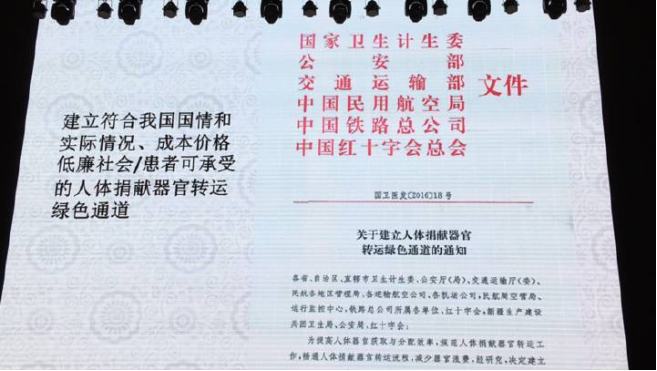
▲Notice on establishing a green channel for the transportation of donated human organs.
The response was unusually rapid. Six national ministries—including the National Health Commission, the Ministry of Public Security, the Ministry of Transport, the Civil Aviation Administration of China, China Railway, and the Red Cross Society of China—jointly established the Green Channel for the Transportation of Donated Human Organs. The initiative created priority logistical pathways designed to minimize delays during organ transport across the country.
As Professor Chen explained:
"Six departments sat down together to discuss establishing a green channel for human organ transfer, ensuring that all organ transport is as uninterrupted and timely as possible, with seamless connections from landing on a plane to boarding a high-speed train."
The Green Channel illustrates an important feature of China's transplantation reforms. Improvements have not been limited to legislation or ethical regulation. They have also addressed the operational realities of transplantation, including transport logistics, communication, and coordination across multiple governmental agencies.
Quality as a National Strategy
Perhaps the most striking feature of the contemporary Chinese system is its emphasis on continuous quality management.
Professor Chen explained that every transplant centre is evaluated according to standardized indicators, including surgeon qualifications, procedural volume, graft survival, patient survival, and institutional performance. Regular national meetings review these data and identify opportunities for further improvement.
This reflects an important evolution in transplantation. Modern programmes are no longer judged solely by the number of procedures performed but increasingly by measurable clinical outcomes. Registries, quality audits, benchmarking, and long-term follow-up have become integral components of transplantation governance worldwide. China's reforms have increasingly adopted this model.
From my perspective, this emphasis on quality assurance represents one of the most significant achievements of the reform process. No transplantation programme becomes trustworthy through legislation alone. Confidence ultimately depends upon transparent reporting, measurable outcomes, continuous audit, and the willingness to identify and correct deficiencies.
Learning Through International Collaboration
Another characteristic that receives comparatively little international attention is the extent of professional collaboration between Chinese and international transplant communities.
Throughout the reform process, Chinese transplant leaders invited internationally recognized experts—including Francis Delmonico, John Fung, Nancy Ascher, and many others—to participate in scientific meetings, educational programmes, and policy discussions. Their involvement reflected a deliberate effort to benchmark Chinese practice against internationally recognized standards rather than to develop the system in isolation.
This openness to external expertise has been one of the defining characteristics of the reform period. While differences between national transplantation systems remain, contemporary challenges—including organ utilization, machine perfusion, artificial intelligence, precision immunosuppression, and quality science—are increasingly shared across countries. Scientific progress depends less on political boundaries than on international collaboration.
Chapter 5
Evidence, Narratives, and the Responsibility of Scientific Debate
The controversy surrounding China's transplantation system has now continued for more than two decades. During that time, historical practices, documented reforms, human-rights concerns, advocacy campaigns, scientific publications, political statements, and media reporting have become increasingly intertwined. As a result, discussions that began as questions of transplantation ethics have evolved into a broader debate extending well beyond medicine itself.
One consequence has been the emergence of two largely parallel narratives.
The first emphasizes historical procurement practices, allegations involving prisoners of conscience, questions regarding transparency, and broader concerns about human rights. This narrative has profoundly influenced international opinion and continues to shape discussions within medical journals, professional societies, legislatures, and the media.
The second focuses on the transformation of China's transplantation system since 2007. It highlights legal reform, the introduction of the China Organ Transplant Response System (COTRS), the transition to voluntary citizen donation beginning in 2015, strengthened ethics oversight, mandatory quality-control mechanisms, national auditing systems, and increasing international scientific collaboration.
Both narratives draw upon published evidence. Yet they frequently engage only partially with each other. Recent peer-reviewed analyses of China's transplantation system do not seek to rewrite or minimize its history. On the contrary, they explicitly describe the previous use of organs from executed prisoners, the public commitment by Chinese authorities to terminate that practice, and the comprehensive legal, regulatory, and organizational reforms subsequently implemented. Nevertheless, much of the international discussion continues to rely predominantly on historical allegations while giving comparatively little consideration to the published evidence documenting the present system. The resulting disconnect is not between history and current practice, but between a rapidly expanding body of evidence describing contemporary governance and a narrative that remains anchored primarily in the past. This divergence is not merely an academic curiosity. Citation patterns influence scientific understanding, professional opinion, public policy, and ultimately public trust. When one body of literature repeatedly cites historical allegations while largely overlooking subsequent institutional developments, readers may conclude that little has changed.
Historical concerns should neither be forgotten nor minimized. China's acknowledged use of organs from executed prisoners represented a serious ethical problem and deserved the international criticism it received. Equally, the reforms introduced over the past decade should not be dismissed simply because they followed earlier deficiencies. The appropriate question is not whether history occurred, but whether the available evidence adequately reflects the current state of the system.
As transplant physicians, we are trained to distinguish between hypothesis and proof, anecdote and evidence, correlation and causation. Those same principles should guide ethical debates surrounding transplantation. Individual testimony may initiate an investigation, but it cannot by itself establish systematic practice. Advocacy organizations perform an important role in drawing attention to potential abuses, but their conclusions, like those of governments or professional societies, should remain open to independent verification and critical scrutiny.
This principle applies equally to all participants in the debate. Governments should not expect official statements to be accepted without question. Advocacy groups should not expect allegations to be accepted without robust evidence. Scientists, editors, and policymakers share the responsibility of evaluating both according to the same evidentiary standards.
During my career, I have worked within transplantation systems in Germany, Canada, and China. Each has its own strengths, weaknesses, and historical challenges. None is perfect. Every national system continues to evolve through experience, scientific progress, ethical reflection, and public oversight. Judging one country's contemporary transplantation programme exclusively through the lens of its past risks overlooking genuine institutional change. Equally, celebrating reform without continued independent evaluation would be inconsistent with the principles of scientific accountability.
The debate surrounding China therefore illustrates a broader challenge facing modern medicine: how should rapidly evolving systems be assessed when historical controversies continue to influence present-day perceptions?
In my view, the answer lies in evidentiary completeness.
Contemporary assessments should incorporate historical evidence, recent legal and regulatory reforms, governance structures, quality-management data, and current clinical practice. Editorials, policy statements, and review articles should strive to engage with the full body of relevant literature rather than selectively citing evidence that supports a single interpretation. Scientific credibility depends not on confirming existing narratives but on continually reassessing conclusions as new evidence becomes available.
The debate over State-Owned Organs is therefore about more than one documentary. It raises fundamental questions about how narratives are constructed, how evidence is evaluated, and how international opinion is formed. Medicine has long recognized that extraordinary claims require extraordinary evidence. That principle should apply equally to allegations of misconduct and to claims of successful reform.
Ultimately, the future of transplantation depends not on advocacy or political rhetoric, but on transparency, reproducible evidence, independent oversight, and open scientific dialogue. These principles remain universal. They are neither Chinese nor Western. They are simply the foundations upon which scientific medicine is built.
References
[1]Nashan B, Wang H, Huang J. Legal Framework on Organ Donation and Transplantation in China. Transplantation. 2026 Jun 1;110(6):e1185-e1199. doi: 10.1097/TP.0000000000005623. Epub 2026 Feb 24. PMID: 41738727; PMCID: PMC13182809.
[2]Nashan B, Hugo C, Strassburg CP, Arbogast H, Rahmel A, Lilie H. Transplantation in Germany. Transplantation. 2017 Feb;101(2):213-218. doi: 10.1097/TP.0000000000001554. Erratum in: Transplantation. 2017 Apr;101(4):e155. doi: 10.1097/TP.0000000000001677. PMID: 28118313.
[3]Nashan B, Settmacher U, Koch M. The German Transplant Certification. Hepatobiliary Surg Nutr. 2024 Apr 3;13(2):382-386. doi: 10.21037/hbsn-24-36. Epub 2024 Mar 21. PMID: 38617472; PMCID: PMC11007333.
[4]Liu A, Song C, Nashan B, Wang H. Pediatric Organ Transplantation in China. Pediatr Transplant. 2026 Apr;30(4):e70312. doi: 10.1111/petr.70312. PMID: 41923555; PMCID: PMC13044555.
